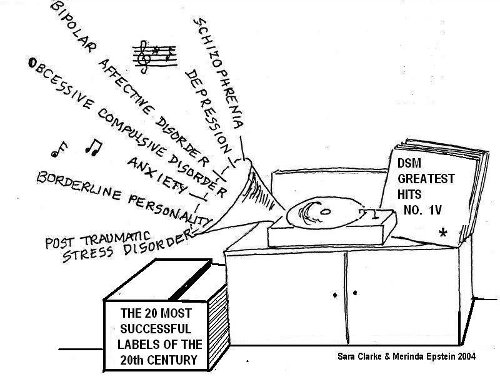
Within this post the group members will look at how Gender Identity Disorder (GID) treatments affect children immediately as well as in the long term. To start off, GID must be defined in terms of the Diagnostic and Statistical Manual of Mental Disorders, specifically the Fourth Edition Test Revision.
Diagnostic criteria for Gender Identity Disorder
"A. A strong and persistent cross-gender identification (not merely a desire for any perceived cultural advantages of being the other sex).
In children, the disturbance is manifested by four (or more) of the following:
(1) repeatedly stated desire to be, or insistence that he or she is, the other sex
(2) in boys, preference for cross-dressing or simulating female attire; in girls, insistence on wearing only stereotypical masculine clothing
(3) strong and persistent preferences for cross-sex roles in make-believe play or persistent fantasies of being the other sex
(4) intense desire to participate in the stereotypical games and pastimes of the other sex
(5) strong preference for playmates of the other sex
In adolescents and adults, the disturbance is manifested by symptoms such as a stated desire to be the other sex, frequent passing as the other sex, desire to live or be treated as the other sex, or the conviction that he or she has the typical feelings and reactions of the other sex.
B. Persistent discomfort with his or her sex or sense of inappropriateness in the gender role of that sex.
In children, the disturbance is manifested by any of the following: in boys, assertion that his penis or testes are disgusting or will disappear or assertion that it would be better not to have a penis, or aversion toward rough-and-tumble play and rejection of male stereotypical toys, games, and activities; in girls, rejection of urinating in a sitting position, assertion that she has or will grow a penis, or assertion that she does not want to grow breasts or menstruate, or marked aversion toward normative feminine clothing.
In adolescents and adults, the disturbance is manifested by symptoms such as preoccupation with getting rid of primary and secondary sex characteristics (e.g., request for hormones, surgery, or other procedures to physically alter sexual characteristics to simulate the other sex) or belief that he or she was born the wrong sex.
C. The disturbance is no concurrent with a physical intersex condition.
D. The disturbance causes clinically significant distress or impairment in social, occupational, or other important areas of functioning.
Coded based on current age:
302.6 Gender Identity Disorder in Children
302.85 Gender Identity Disorder in Adolescents and Adults
Specify if (for sexually mature individuals):
Sexually Attracted to Males
Sexually Attracted to Females
Sexually Attracted to Both
Sexually Attracted to Neither
302.6 Gender Identity Disorder Not Otherwise Specified
This category is included for coding disorders in gender identity that are not classifiable as a specific Gender Identity Disorder. Examples include
1. Intersex conditions (e.g., partial androgen insensitivity syndrome or congenital adrenal hyperplasia) and accompanying gender dysphoria.
2. Transient, stress-related cross-dressing behavior
3. Persistent preoccupation with castration or penectomy without a desire to acquire the sex characteristics of the other sex"
In children, the disturbance is manifested by four (or more) of the following:
(1) repeatedly stated desire to be, or insistence that he or she is, the other sex
(2) in boys, preference for cross-dressing or simulating female attire; in girls, insistence on wearing only stereotypical masculine clothing
(3) strong and persistent preferences for cross-sex roles in make-believe play or persistent fantasies of being the other sex
(4) intense desire to participate in the stereotypical games and pastimes of the other sex
(5) strong preference for playmates of the other sex
In adolescents and adults, the disturbance is manifested by symptoms such as a stated desire to be the other sex, frequent passing as the other sex, desire to live or be treated as the other sex, or the conviction that he or she has the typical feelings and reactions of the other sex.
B. Persistent discomfort with his or her sex or sense of inappropriateness in the gender role of that sex.
In children, the disturbance is manifested by any of the following: in boys, assertion that his penis or testes are disgusting or will disappear or assertion that it would be better not to have a penis, or aversion toward rough-and-tumble play and rejection of male stereotypical toys, games, and activities; in girls, rejection of urinating in a sitting position, assertion that she has or will grow a penis, or assertion that she does not want to grow breasts or menstruate, or marked aversion toward normative feminine clothing.
In adolescents and adults, the disturbance is manifested by symptoms such as preoccupation with getting rid of primary and secondary sex characteristics (e.g., request for hormones, surgery, or other procedures to physically alter sexual characteristics to simulate the other sex) or belief that he or she was born the wrong sex.
C. The disturbance is no concurrent with a physical intersex condition.
D. The disturbance causes clinically significant distress or impairment in social, occupational, or other important areas of functioning.
Coded based on current age:
302.6 Gender Identity Disorder in Children
302.85 Gender Identity Disorder in Adolescents and Adults
Specify if (for sexually mature individuals):
Sexually Attracted to Males
Sexually Attracted to Females
Sexually Attracted to Both
Sexually Attracted to Neither
302.6 Gender Identity Disorder Not Otherwise Specified
This category is included for coding disorders in gender identity that are not classifiable as a specific Gender Identity Disorder. Examples include
1. Intersex conditions (e.g., partial androgen insensitivity syndrome or congenital adrenal hyperplasia) and accompanying gender dysphoria.
2. Transient, stress-related cross-dressing behavior
3. Persistent preoccupation with castration or penectomy without a desire to acquire the sex characteristics of the other sex"
The reason why I give the current conditions for diagnosing children with this "disorder" is because they are just that, current. Yes, the conditions are going to change, but like we went over in class, it doesn't seem that they will be changing much for children which is a huge problem. Children are always growing and changing their minds constantly, so it seems to me that it is impossible for a child to be considered disordered on choices they are consciously making without negative effects on themselves or those around them. Yes, it may make some people uncomfortable but unless they are putting themselves in eminent danger there is no problem with a child wanting to dress as the opposite gender of what they are or play "stereotypical" games of the opposite gender.
-Emily
Throughout the semester we all have made posts and learned more in depth about the DSM and Gender Identity Disorder. Generally GID is a decision based on the individual, and with some criticism to the DSM not delusional as seen in mental illnesses. There are so many aspects to touch on with the topic. A couple that we found were GID in adolescents, how it "correlates" to other diseases, acceptance, treatments, and rights. We all really learned a lot this semester through personal exploration and research and how the justice for transgendered people needs to come forward, and be faced head on. What we also have realized is that people would rather criticize and fix someone who is different rather than to accept them and give them the respect that is right. Someone with Gender Identity Disorder will be picked at, questioned, and pushed to their limits by their hetronormative peers instead of just letting them live their lives. Through our posts of stories, research, psychological history of Gender Identity Disorder in the DSM we want to inspire you take a opportunity to be open minded to everything that is going on around you, and the privileges that many of us take for granted that we have. Based on a few classifications in the DSM and a decision to be who some wants to be their whole life can be turned upside down, children and adults.
-Brittani
There is no clear cause of GID but here’s what some think: “Many contemporary clinicians have argued that GID in children is the result, at least in part, of psychodynamic and psychosocial mechanisms, which lead to an analogous fantasy solution: that becoming a member of the other sex would somehow resolve internalized distress.” (Zucker) Psychodynamics refers to the relation between conscious and unconscious mental processes, and psychosocial refers to a relation between social and psychological behaviors. The author uses this perspective to argue that when treating children with GID, the primary goal should be to make children comfortable with their biological gender identity. It is apparent that the author places higher validity on the child’s gender over the child’s desired sexuality.
Understandably, there is a lot of controversy surrounding the treatment of GID in children. Professionals Langer and Martin reject hormonal and psychiatric treatment and favor a therapeutic approach arguing that “attempting to change children's gender identity [for the purpose of reducing social ostracism] seems as ethically repellant as bleaching black children's skin in order to improve their social life among white children” (p. 14).
According to Zucker, “the prospects for therapeutic change with regard to GID become considerably less malleable over the life course.” In other words, the successfulness of GID decreases with age. GID diagnosed adults are rarely interested in psychotherapeutic techniques, usually turning to hormones and surgery, and the ones who do have little success. Adolescents rarely respond to therapeutic treatment as well. Hormones and surgery may be the best remedies for adolescents seeking treatment as well. Zucker believes that there is strong evidence that therapeutics may work in the case of children with GID although, “there is a large empirical black hole in the treatment literature for children with GID. As a result, the therapist must rely largely on the “clinical wisdom” that has accumulated in the case report literature and the conceptual underpinnings that inform the various approaches to intervention.”
-Amanda Ranusch
GID has two basic models of thought as far as treatment goes. The first is the therapeutic model. This has both the individual child diagnosed with the disorder and their entire family go under psychological therapy. According to the typical therapeutic perspective, the child has a family that is not psychologically and emotionally functioning as it should. His mother could be depressed or clingy; his father could be physically or emotionally absent. These things, according to this perspective, are what causes gender role confusion.
The second model of thought, called the accommodation model, says the child would be better off as the opposite gender. The downside of this is that if the child changes over time and no longer feels they should be the other gender, it is too late as the changes have already been put in place to change their gender. Also, this model tends to ignore the fact that life is often very stressful as a transgender individual.
-Zack
In "Gender Identity Disorders in Childhood and Adolescence: A Critical Inquiry" the authors touch on what can result if a child is diagnosed with GID. One main short-term thing that they repeatedly going back to was that if a child was diagnosed with GID then they would likely have other pathological disorders; Internalizing or externalizing disorders. Male bodied kids usually showed internalizing disorders(disturbances in emotion i.e. depression) while femal bodied kids expressed externalizing disorders (behavior). They also said that these kids may be expressing some type of distress through gender. As Amanda will touch on soon, they state that these symptoms are not the same in the long-run of these kids' lives.
-Derek
Sources:
American Psychiatric Association. Diagnostic and statistical manual of mental disorders (4th ed., text revision). Washington, DC: Author. 2000. web. 25 April 2012
Alice Dreger, "Gender Identity Disorder in Childhood: Inconclusive Advice to Parents," Hastings Center
Report 39, no 1 (2009): 26-29.
Zucker, KJ. “Children with gender identity disorder: Is there a best practice?” Neuropsychiatrie de l'enfance et de l'adolescence [0222-9617]